Showing posts with label Topik Level 1. Show all posts

Wednesday, 14 May 2014

Topik Level 1 Grammar : ~으려고 Intention to do something

~으려고
Expresses the purpose or intention of an action. It has the same meaning as 'in order to do some action'
Verb + 으려고
  • Used with verb stems ending in a consonant

Verb + 려고
  • Used with verb stems ending in a vowel

아내에게 주려고 선물을 샀어요
I bought a present to give to my wife
중국어를 배우려고 학원에 다니고 있어요
I go to an academy to learn chinese
  1. Practise: I go to Sunae-dong to watch a movie


  • 영화를 보려고 선애동에 가요

Monday, 10 March 2014

TOPIK Grammar: ~ 거나 / ~말거나 - or / or not

Grammar ~ 거나 / ~ 말 거나

This is a conjunctive ending used like 'or' / 'or not' when talking about 2 or more actions or states.

or
토요일 에는 보통 친구들 과 영화를 보거나 집에서 쉬 어요

or not
그녀가 울 거나 말거나 내버려둬

Some more sentences
피터의 아 버지는 선생님 이 거나공무원일 거예요

TOPIK Grammar: 과, 와, ~ and (Subject Marker)

Grammar: 과, 와, ~ and

This is a subject market and means 'and' see below  for some examples of use...


  • When the subject ends with a vowel ~ 와


하비 에린
사과 바나나


  • When the subject ends with a consonant ~ 과


지공이
가방 노트

Some more examples:

  • 우유 를 먹었어요
  • 친구 영화 보러 갈 거예요
  • 저는 가방책을샀어요
  • 영희는 사람 결혼했어요


For the Korean Wiki project page click > Here <

Friday, 6 December 2013

A post about TOPIK vocabulary study and the meaning of 구경 - sightseeing

Last night was my TOPIK study night after spending most of the week on my Sogang 2A book study.

I returned to the vocabulary book and the first set of words, I knew all the words, but half of them, not  instantly and only after I read the translation. That is to say that once I read the translation I  had a recollection that I knew the word.  I wrote out the example sentences and translated them, I was pleasantly surprised that I actually understood the sentences with too much reliance on Google translate.

One thing that really confused me was the word 구경 - translated in the topic vocabulary book as Sightseeing!

The Example sentences, that caused the confusion were:

저의 취미는 야구 구경이에요.
My hobby is watching (구경) baseball.

and

지난 주말에 영화구경을 했어요.
Last weekend I watched (구경) a movie.


The meaning of 구경 is more correctly; viewing an event / performance (sports game / movie) rather than sightseeing.

I will check in my TOPIK lesson how to use this in another sentence for a soccer match or theatre play and post some more examples as a comment on this post.

I still need to complete the first test questions, the sentences in the vocab test seem much easier than those in the examples. However, they sometimes give you an alternative word to show you the meaning of the sentence before you fill in the blank, - This is kind of crazy as if you don't know the common word it is unlikely that you know the alternative!  but, on the other hand is good as you effectively learn 2 words and it ensures you understand the meaning.

My next plan is to just drill myself to get the rhythm and pronunciation correct for all of the example sentences and try to make some of my own.


Sunday, 1 December 2013

topik setback...

I suffered a bit of a setback in my second language exchange/korean lesson. THE GRAMMAR BOOK IS AMAZINGLY DIFFICULT.  My exchange partner/teacher  was shocked at how complex the grammar point explanations were and how difficult the sentences were compared to the other books. I wonder how well I need to know the grammar to pass the topik? Do I just need to be able to write some sentence correctly or do I need to understand it intimately?

Also without knowing all 1400 words from the vocabulary book can I even comprehend the grammar amd writing books...

However I am determined to continue but maybe 1 year is not enough time to study for the topik... it seems much harder than I thought...


Wednesday, 27 November 2013

Topik 1 - First Five words and studying with EBS Book and Google translate.

I finally had some time to look at my TOPIK books and start to do some studying with them.
As I posted earlier I chose the vocabulary book, as I think this is the easiest to self study with.  The book is great and contains a list of vocabulary with the English Chinese and Japanese translation. The vocabulary is broken up into small lists (14 words) on the left page and example sentences (2 for each word) on the following 2 pages and then a test / worksheet on the next few pages.

1. 가방 - Bag

가방 안에 책이 있어요.
가방이 크지만 가벼워요.

2. 가운데 - Centre (middle/between)

연필은 책하고 안경 가운데에 있어요.
아이는 아버지하고 어머니 가운데에 있어요.

3.거울 - mirror

거울을 보고 있어요.
거울을 닦아요.

4. 걱정 - worry

내일 시험을 보는데 준비를 못 해서 걱정이에요.
너무 걱정하지 마세요.

5. 건너편 - The opposite side

하교 건너편에 은행이 있어요.
우체국 건너편에 병원이 있어요.

I started with the first 5 words and sentences, I could understand most of the sentences but then I hit a problem with self study... if I was going to commit these to memory, I needed to make sure that I was pronouncing them correctly, I had an idea!

Using the Google translate APP on my android phone I discovered a way that I was able to self correct my pronunciation.  This is how I did it;

Google Translate
...rather than typing the sentence into google translate and then listening to and trying to mimic the pronunciation of the google translate voice, I though why not read (say) the sentence in Korean and self correct my pronunciation until the software recognises the sentence correctly (usually a couple of times).  the added benefit of this is that you have to say it quite quickly, if you pause, translate thinks that you have finished speaking and processes the audio to return the matching sentence and translation.  So I am learning the sentence, correct pronunciation and natural speed and memorising it through repetition all in one hit.  This will, of course, work for any language self study and I am going to make this method part of my study plan.

Thursday, 21 November 2013

TOPIK LEVEL 1 토픽 - 초급

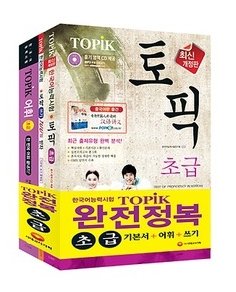
I have ordered a TOPIK (Level 1) beginners 토픽 - 초급 book set, published by EBS.  It contains 3 books and CD's. The books are, Vocabulary book, pre-test and writing...  The book appears to be completely in Korean as there is only one version, not the usual, English, Chinese, Japanese versions.  It is a bit daunting but I feel I am 'nearly' ready.  I will start a private 1-2-1 class / language exchange on Friday and I plan to study this book in that class.

I will review it after I have studied with it for a while and after I have started the class.

Tuesday, 12 November 2013

Here is the vocabulary list for Topik Level 1:


I created this spreadsheet by copying the list from a TOPIK study Blog post (I forget which one, but I will comeback and credit you when I find it and Thankyou for producing it!) - Please don't really on it as an accurate list - I didn't check! - But I have no reason to think it is anything other than a correct (at the time at least) list of Vocab for Topik Level 1!